
Last updated October 31, 2026
 Home additions & ADU
 Kitchen remodeling
 Bathroom remodeling
 Roofing
 Windows & doors
 Driveway & pavers
 Fence
Free written scope consultation - allowances, timeline, and change-order rules on paper before a single trade is scheduled
Construction Warning Signs: A Paradise Homeowner’s Reference Guide
Most Paradise homeowners walk past the early warnings of a five-figure repair every single day. You see a hairline crack near the window and assume the house is settling normally. In Paradise, that crack might be thermal expansion, which is harmless. Or it might be the first visible sign of soil movement under your slab, which is anything but. This guide teaches you to read your home’s failure signatures the way a builder does. We’ll walk through stucco crack patterns, roof tile conditions you can check from the ground, attic clues that mean your HVAC is working too hard, and hardscape shifts that signal drainage trouble. You’ll learn what you can monitor yourself and what genuinely requires a professional inspection.
Quick Answer
Construction warning signs in Paradise, NV fall into five categories: structural cracks in stucco (stair-step patterns following block joints), concrete roof tile failures (slipped ridge caps, cracked field tiles, underlayment stains), attic HVAC ductwork failures (disconnected flex duct, failed mastic seals), window frame problems (warped vinyl, fogged dual-pane glass, widening frame-to-stucco gaps), and hardscape movement (negative grade, cracked pavers, pool coping separation). Most of these indicate issues that get materially more expensive every year they’re ignored.
Styles & brands we work with
Table of Contents
- Stucco Cracks: Cosmetic vs. Structural in a Desert Climate
- Concrete Tile Roof Warning Signs You Can Spot From the Ground
- Attic HVAC Ductwork: What 160°F Does to Your System
- Window Frame Warning Signs Unique to Paradise
- Hardscape and Drainage Red Flags That Precede Foundation Problems
- ADU and Prefab Structure Site Warning Signs
- Common Mistakes to Avoid
- When to Call a Professional
Stucco Cracks: Cosmetic vs. Structural in a Desert Climate
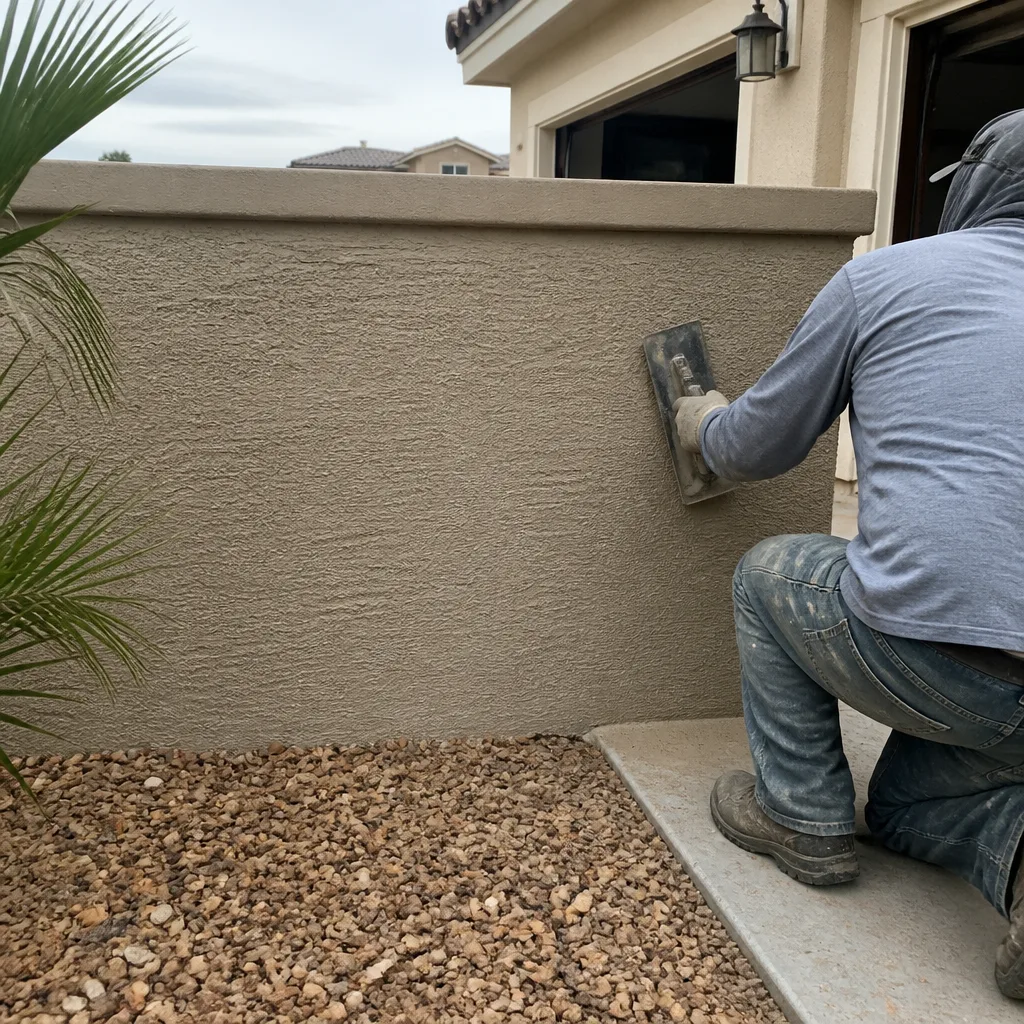
Stucco is the dominant exterior cladding across Paradise and greater Clark County. It’s not because stucco is perfect. It’s because stucco handles 110°F days and 40° temperature swings better than most sidings, and it’s relatively inexpensive to install over steel stud framing. But stucco cracks are the most misunderstood warning sign in southern Nevada construction. The key distinction is not whether a crack exists. It is what the crack pattern tells you about what is happening underneath.
In our experience working on Paradise homes, we classify stucco cracks into three categories. Thermal expansion cracks are the most common and the least concerning. These appear as thin, vertical, or diagonal lines, usually under 1/16 inch wide, most often near window corners, door frames, and wall intersections. They are caused by the daily heating and cooling cycle. Stucco expands during the day when the sun hits it and contracts at night. After enough cycles, it cracks at stress points. These are cosmetic. They do not threaten your structure, and they typically do not let water in unless they exceed 1/8 inch and run horizontally along a surface where water can pond.
Structural cracks are a different animal entirely. A stair-step crack that follows the mortar joints of CMU block is a red flag. CMU stands for concrete masonry unit, the blocks used in many Paradise foundation walls and stem walls. When the soil under a foundation settles unevenly, or when expansive clay soils swell and shrink with moisture changes, the block wall moves. Mortar joints are the weakest point, so the crack follows them in a zigzag pattern. If you see a stair-step crack wider than 1/16 inch, especially on the west or south side of your home where the soil gets hottest and driest, you need a structural evaluation. Repainting over it does nothing except hide the problem for another year while the movement continues.
The third category is water intrusion signatures. These look different. You’ll see brownish staining below a crack, flaking paint, or a soft, powdery surface when you press on it. This means water has been getting behind the stucco. In Paradise, rain is infrequent but intense when it comes. A small crack that lets water in during a monsoon downpour can rot the paper backing, rust the steel studs, and create mold inside the wall cavity. None of that is visible from outside until the damage is advanced.
Here is what to check on your stucco, step by step:
- Walk the full perimeter of your home in the morning when shadows make cracks visible. Mark anything wider than 1/16 inch with painter’s tape.
- Classify each crack by pattern. Straight vertical or diagonal lines under 1/16 inch are typically thermal. Stair-step patterns following block joints, or horizontal cracks wider than 1/8 inch, need professional evaluation.
- Press gently on any stained or discolored areas. Soft or crumbling stucco is a water intrusion signal, not a settling signal.
- Photograph each marked crack monthly for three months. Track whether the width changes. Cracks that widen over time are structural. Cracks that stay stable are likely cosmetic.
Concrete Tile Roof Warning Signs You Can Spot From the Ground
Concrete tile roofs are everywhere in Paradise. They handle UV exposure better than asphalt shingles and they look appropriate for the desert aesthetic. But concrete tile creates a specific monitoring problem: the tile is not the waterproofing layer. The waterproofing system is the underlayment beneath the tile. The tile is the UV shield and impact surface. It protects the underlayment. And when the underlayment fails, water gets into your attic long before you see a stain on your ceiling.
The first warning sign is slipped ridge caps. Stand across the street and look at the peak of your roof. Ridge caps are the rounded tiles that sit on top of the ridge line. If any are misaligned, tilted, or missing, water has a path into the underlayment. Ridge caps are held in place with mortar or mechanical fasteners. In Paradise, the mortar dries out over years of heat exposure. One good monsoon wind gust later, a section of ridge cap is sitting in your yard or your neighbor’s yard. This is a repair you schedule before the next rain, not after.
The second sign visible from the ground is cracked field tiles. Field tiles are the big flat tiles that cover the roof slope. A cracked tile isn’t an emergency by itself, but it is a signal that the tile surface is reaching the end of its life. Concrete tiles in Paradise deal with extreme thermal cycling. They bake at 150°F during the day and cool to 70°F at night. Over 20 to 30 years, this cycling makes tiles brittle. When hail hits, instead of bouncing off, tiles crack. When a roof worker walks on them wrong, they snap. If you count more than five cracked tiles from the ground, the roof deck likely needs a professional assessment.
The third sign is not visible from outside at all, which is why it catches so many Paradise homeowners off guard. A dark spot or staining on your ceiling, usually in a corner or near a light fixture, is water that penetrated the underlayment weeks or months before you noticed it. The water traveled under the tile, hit a seam in the underlayment, and dripped through the decking. By the time you see the stain, the affected area is larger than the stain suggests. If you see any interior ceiling discoloration, get an attic inspection before the next monsoon season.
Attic HVAC Ductwork: What 160°F Does to Your System
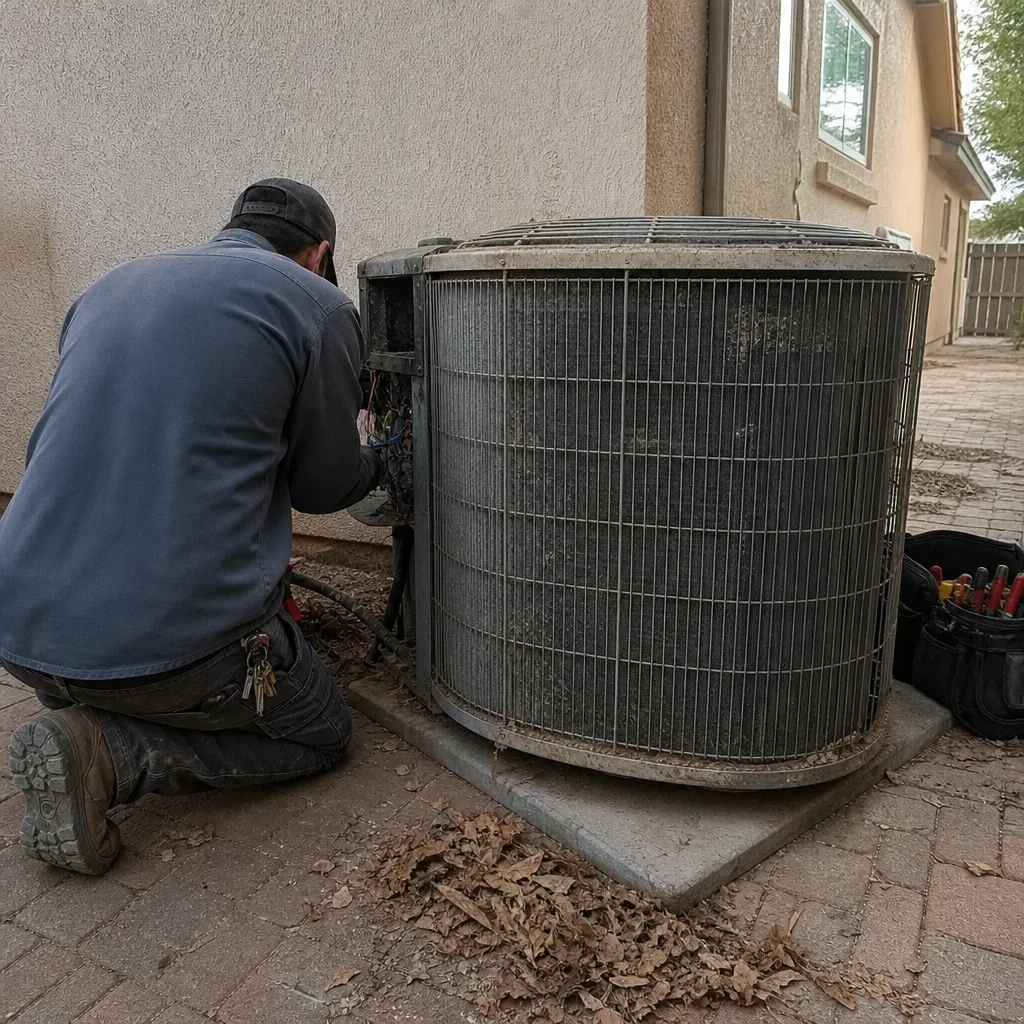
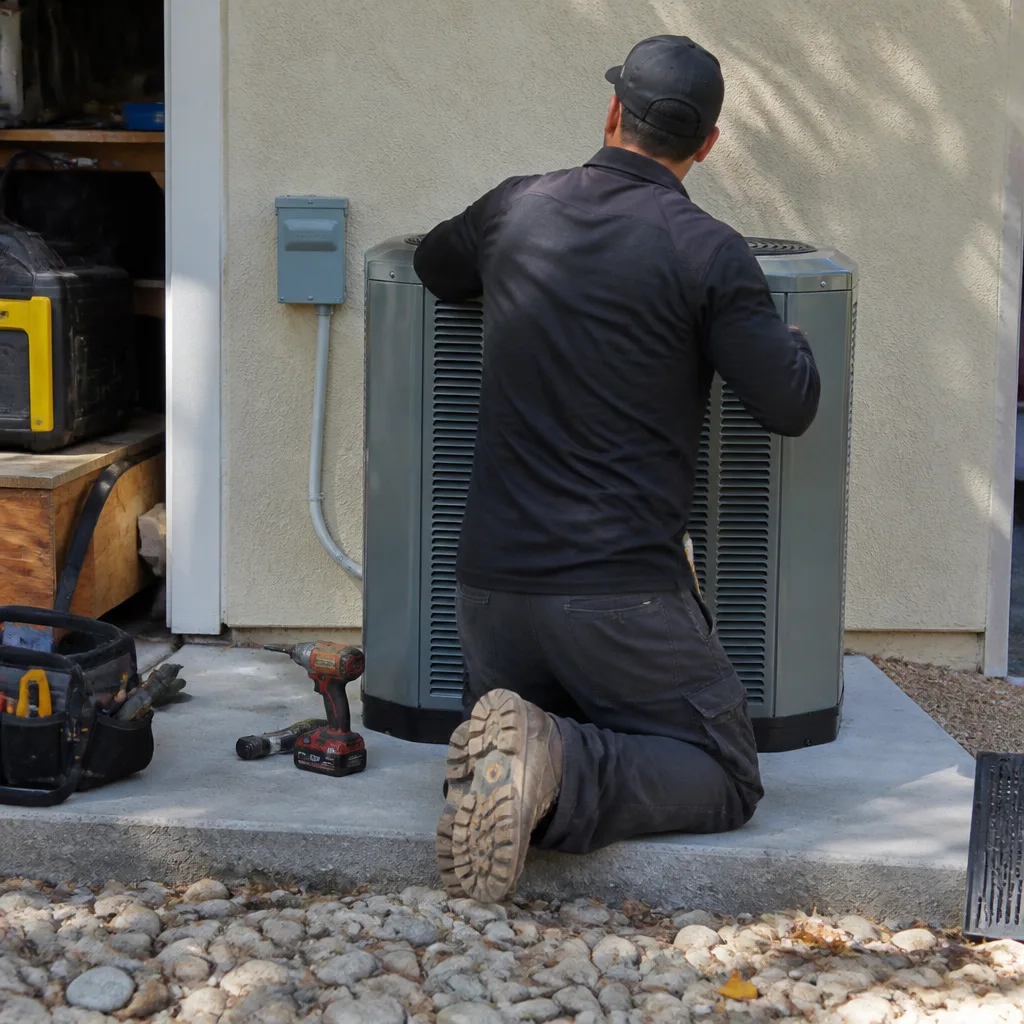
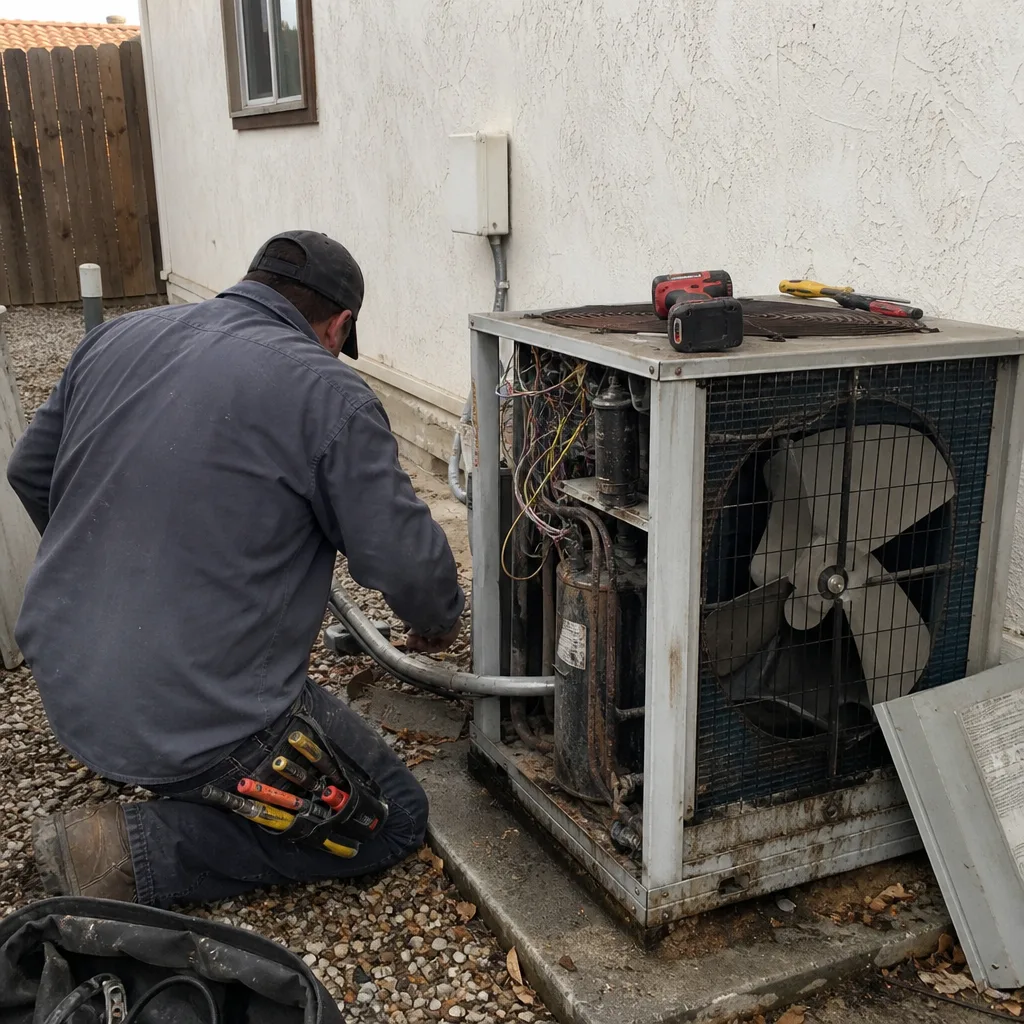
Paradise attics are brutal environments. In July and August, attic temperatures regularly exceed 160°F. Your HVAC ductwork lives in that heat. Most of it is flex duct, which is a wire coil wrapped in fiberglass insulation and an outer plastic jacket. Flex duct is cheap and easy to install, which is why every production builder in Clark County uses it. But flex duct fails in predictable ways, and most homeowners never look at it until their AC bill doubles.
The most common failure we see is disconnected flex duct. The connection between a flex duct run and a metal distribution box is made with a zip tie and mastic sealant. Under 160°F heat, the mastic hardens and cracks. The zip ties get brittle. The weight of the duct, combined with air pressure from the blower, eventually pulls the connection apart. When a duct disconnects, your air conditioner is cooling your attic, not your living room. You’ll notice one room that never gets cool, while other rooms are fine.
The second common failure is failed mastic seals at the plenum. The plenum is the metal box on top of your furnace or air handler where all the supply ducts connect. Mastic is the paste sealant applied to those connections. In Paradise heat, mastic fails faster than the ducts themselves. As it cracks, conditioned air leaks into the attic at the source. According to ENERGY STAR, duct leakage in southern Nevada homes commonly reaches 20 to 30 percent. That means 20 to 30 percent of your cooling bill is air conditioning empty attic space.
The third issue is insulation compression. Flex duct has an R-value rating, typically R-6 or R-8. That rating depends on the fiberglass insulation staying fluffy. When someone works in the attic and kneels on the ducts, or when the ducts were installed poorly and rest against the underside of the roof deck, the insulation compresses. Compressed insulation loses R-value. The duct becomes a heat exchanger, warming the cooled air inside as it travels. If your AC runs constantly on summer days and never reaches the thermostat setting, insulation compression may be part of the problem.
Here is how to check for duct problems from inside your home, step by step:
- Close all your interior doors on a hot afternoon. After an hour, walk through and check each room’s temperature. A room 8 to 10 degrees warmer than the rest of the house has a supply problem.
- Hold a tissue near the supply register when the AC is running. A weak stream, or no stream, means the duct run is disconnected or crushed.
- Check your last three summer electricity bills. A 30 percent year-over-year jump without a change in usage patterns is a strong duct leakage indicator.
- Go into your attic in the early morning when it’s under 100°F. Look for disconnected ducts, flattened or kinked runs, and gaps in the insulation jacket. Do not do this at 2pm in July.
Window Frame Warning Signs Unique to Paradise
Windows in Paradise get more thermal stress than windows in almost any other US market. A south-facing window in August hits 140°F on the outside while your AC keeps the inside at 75°F. That is a 65-degree differential across the frame, every day, for four months straight. Vinyl frame windows, the most common replacement window in southern Nevada, expand and contract with these temperature changes. Vinyl handles expansion moderately well. But over 15 to 20 years, the material degrades under UV exposure, becomes brittle, and begins to warp.
The first sign of vinyl frame warping is operational. The window gets harder to open and close, especially in the afternoon heat. The frame has distorted slightly, and the sash no longer slides smoothly in the track. You might hear a popping sound when the window finally moves. If you have to shove or lift the window to get it to close, the frame is warped beyond normal tolerance. A warped frame also means the weatherstripping does not seal evenly, which means air leakage, which means higher cooling bills and a dusty house during windstorms.
The second sign is fogged dual-pane glass. Dual-pane windows have a sealed air gap between the two panes. That gap is filled with argon or krypton gas and sealed with a flexible edge seal. In Paradise heat, the edge seal degrades faster than in cooler climates. When the seal fails, outside air enters the gap, moisture condenses between the panes, and the window looks foggy or hazy from the inside. A fogged window cannot be cleaned. The only fix is replacing the glass unit or the entire window. If you have one fogged window, others are likely close behind.
The third sign is frame-to-stucco gap growth. When vinyl frames expand and contract daily, the stucco surrounding the window does not move with them. Over time, the stucco cracks away from the frame, creating a gap. In Paradise, that gap is an entry point for windblown dust and monsoon-driven rain. If you can slide a nickel into the gap between the window frame and the stucco, the seal has failed and needs re-caulking. If the gap is wider, over 1/4 inch, the flashing behind the stucco may be compromised, which is a water intrusion risk.
Hardscape and Drainage Red Flags That Precede Foundation Problems
Drainage is the most underrated construction warning sign in Paradise. Homeowners think about drainage when they see standing water, which in the desert is rare. The real damage happens slowly, during the few heavy rains each year, when water runs against the foundation and saturates the soil underneath. Clark County has expansive clay soils in many areas. Those soils swell when wet and shrink when dry. The swelling lifts sections of your foundation. The shrinking drops them. This cycle, repeated over years, is what causes the structural stair-step cracks described earlier.
The first red flag is negative grade. Grade is the slope of the soil around your foundation. Positive grade slopes away from the house, so water runs toward the yard or the street. Negative grade slopes toward the house, so water runs against the foundation and pools. Check your grade by eye after a rain. Walk the perimeter and look for low spots where water has collected against the stucco. You can also check with a 4-foot level. The soil should drop about 6 inches over 10 feet away from the foundation. If it rises toward the house, the grade needs correction. In Paradise, many homes have landscape beds built up against the foundation, which creates negative grade over time.
The second red flag is cracked pavers over compacted fill. Paver driveways and walkways are common in Paradise. Pavers are installed over a compacted base, typically 4 to 6 inches of crushed stone. When the base is done right, pavers stay level for decades. When the base is done wrong, or when the underlying soil shifts, pavers crack, sink, or separate. A few cracked pavers are a maintenance item. A large sunken area or a wave pattern across the entire surface is a base failure. And base failures near the foundation often indicate the same soil movement that affects the foundation itself.
The third red flag is pool coping separation. Coping is the cap stone or poured concrete edge around the pool. It is installed on top of the pool beam, which is the structural ring at the top of the pool shell. The deck around the pool is poured separately and typically sits on compacted fill. In Paradise, where many pools are surrounded by concrete decks on fill, the deck settles over time. The coping stays with the pool structure. The movement shows up as a gap between the coping and the deck, or as cracks in the coping itself. If the gap widens after rain, the fill under the deck is shifting. This is not just a tripping hazard. It is a signal that the deck is moving, and the movement may eventually affect the pool structure itself.
ADU and Prefab Structure Site Warning Signs
Paradise and the broader Las Vegas area are seeing a surge in accessory dwelling units. Clark County updated its ADU regulations in recent years, and homeowners are building guest houses, rental units, and home offices in backyards that sat empty for decades. Prefab ADU builders like Abodu and Dvele have made the process faster than traditional construction, but prefab construction—like any project—raises the DIY vs Professional Construction: The Paradise Homeowner’s Decision Guide question, and has its own set of warning signs that most Paradise homeowners have never been taught to read.
The first warning sign, oddly enough, is site preparation. Prefab ADUs are set on foundations or slab systems that must be perfectly level. A prefab module has tight manufacturing tolerances. If the site prep is off by an inch, the module will not seat correctly, doors will bind, and the roofline will be visibly out of level. Before the module arrives, check the foundation pad with a laser level. If the pad is not level within the manufacturer’s tolerance, delay the drop. It is far cheaper to fix the pad than to correct a misaligned structure.
The second warning sign is drainage around the ADU footprint. A prefab unit is often placed in the back corner of a Paradise lot, where the grade has never been engineered for a structure. When a slab is poured in that corner, the surrounding soil may slope toward the new unit. After the first monsoon, water collects under the unit, and you get the same expansive soil problems described in the hardscape section. Check the grade around a newly placed ADU immediately after installation and after each significant rain.
The third warning sign is electrical and plumbing connection points. Prefab units arrive with rough-in connections that must be tied into your existing systems. If the connection points are strained, leaking, or showing signs of settling, the unit will need foundation adjustment. Watch for drywall cracks at the point where the module connects to utilities, and check under sinks for drips after the first month of use.
Common Mistakes to Avoid
- Painting over stair-step cracks. Cosmetic coverup is the most common response to structural movement in Paradise homes. A stair-step crack is a soil movement signature, not a paint defect. Repainting hides it until the foundation problem is severe enough to crack interior drywall and bind doors.
- Assuming all stucco cracks are structural. The inverse mistake is just as costly in a different way. Homeowners see a thermal crack and panic, paying for unnecessary repairs or making lowball offers when selling.
- Ignoring fogged dual-pane windows. A fogged window is a failed seal, which means the window is no longer insulating. It is not just a cosmetic annoyance. You are losing cooling energy through that window continuously.
- Waiting to see damage before checking the roof underlayment. By the time a Paradise homeowner sees a ceiling stain, the underlayment has likely failed over a larger area than the stain suggests. Annual attic and roof inspections are cheaper than interior water repairs.
- Assuming drainage is only a problem if you see standing water. In the desert, water moves through the soil in ways that are invisible from ground level. Negative grade and compacted fill failures cause slow foundation movement that shows up years later as structural cracks.
- Building a paver deck over unengineered fill without drainage provisions. Paradise yards often sit on fill material from original home construction. If that fill was not compacted properly, adding a paver deck creates a new load that accelerates settlement.
- Deferring maintenance on the assumption that desert homes don’t have moisture problems. The Paradise climate is dry most of the year, but when water comes, it comes hard and fast. Homes that are not maintained for monsoon conditions fail suddenly, not gradually.
When to Call a Professional
If you find a stair-step crack wider than 1/16 inch, a slipped ridge cap, a disconnected HVAC duct, an expanding window-to-stucco gap, or pool coping separation, call a professional. These are not DIY repairs and they are not deferred maintenance items. They are early warnings of failures that compound in cost the longer they’re ignored. A structural crack is a foundation assessment. A slipped ridge cap is a roofing repair that prevents water damage. A disconnected duct is an HVAC repair that pays for itself in cooling savings. Ellsworth Contractors offers free estimates in Paradise. We assess the warning signs, identify what is cosmetic versus structural, and give you a written scope of work with no obligation. Call (888) 445-6077 to schedule yours.
See the difference
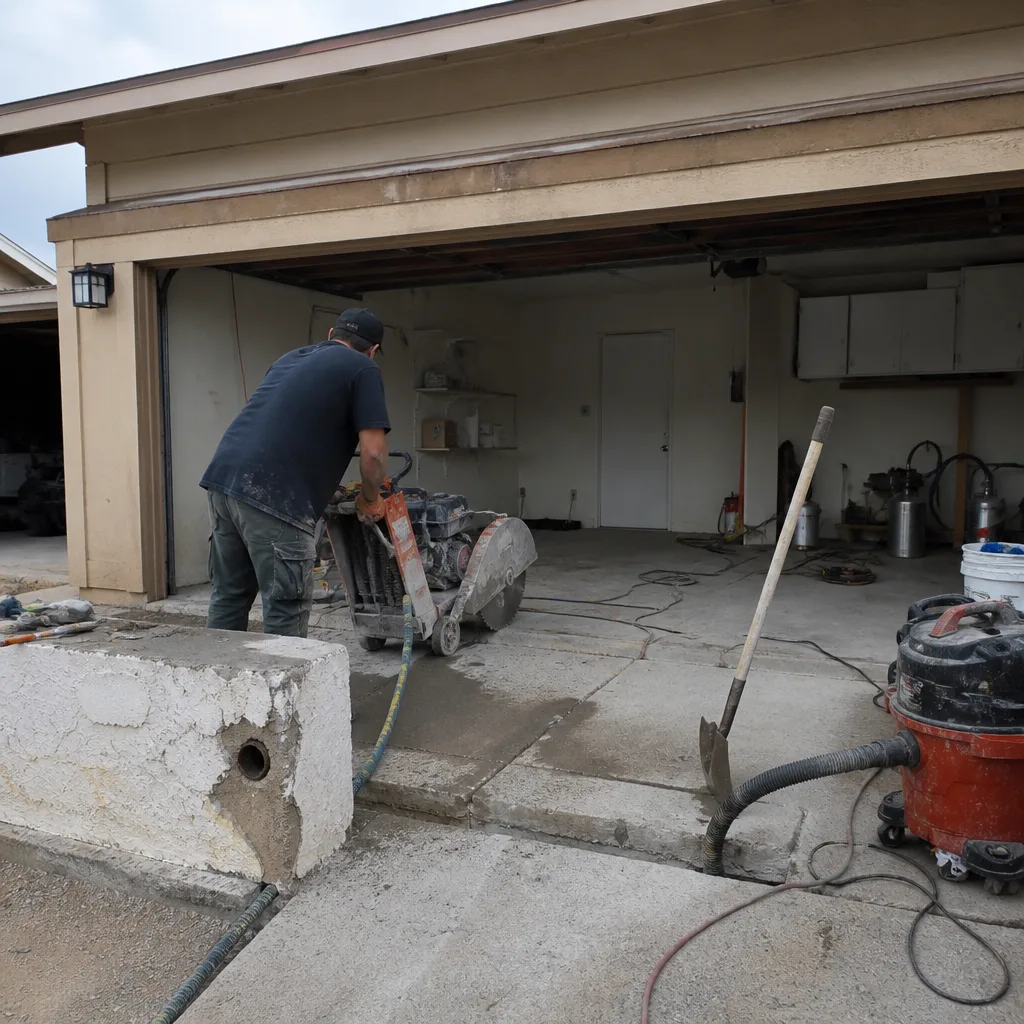 Before
 After
 Before
 After
 Before
 After
Frequently Asked Questions
A structural crack follows a stair-step pattern along the mortar joints of CMU block, or appears as a horizontal crack wider than 1/8 inch. A cosmetic thermal crack is typically a thin vertical or diagonal line under 1/16 inch near window corners. If the crack widens over a three-month period, it is structural. Call Ellsworth Contractors for a Paradise home assessment at (888) 445-6077.
A slipped ridge cap means water has a direct path into the underlayment, and the next significant rain will likely cause interior water damage. It also means the mortar or fasteners holding the ridge caps have failed, which suggests other ridge sections may be loose. Schedule a roof inspection before the next monsoon.
Constant AC operation with no temperature drop usually indicates disconnected or leaking ductwork in the attic, where summer temperatures exceed 160°F and cause mastic seal failure. Other causes include low refrigerant or an undersized system, but duct leakage is the most common in Clark County homes. Call (888) 445-6077 for an Ellsworth Contractors assessment.
No. A fogged window is a failed edge seal that has allowed moisture into the gap between the panes. The sealed glass unit must be replaced. The frame can sometimes be reused, but the insulating value of the window is gone until the glass unit is swapped.
Negative grade means the soil around your foundation slopes toward the house instead of away from it. Water collects against the foundation during rain, saturates the expansive clay soil, and causes foundation movement over time. Correcting negative grade requires regrading with additional soil and often reworking landscape beds.
Yes. Buyers in Paradise increasingly order structural inspections, and an inspector will flag a stair-step crack immediately. A visible structural crack either kills the deal or becomes a negotiation point. Addressing it before listing gives you an inspection report showing the issue was resolved. For a full-scope evaluation from roofline to paver, call Ellsworth Contractors at (888) 445-6077, and explore more guides & resources on protecting your Paradise home.
The Bottom Line
Paradise homes face a narrow set of environmental stresses: extreme heat, UV radiation, thermal cycling, and brief but violent monsoon rains. The construction warning signs that matter in this climate are specific. Horizontal stucco cracks are not the same as stair-step block-joint cracks. A slipped ridge cap on a concrete tile roof is a water intrusion waiting to happen. HVAC ducts that have been baking at 160°F for a decade will leak. Windows, hardscape, and drainage all show movement in ways that compound if ignored. Learn the difference between cosmetic and structural, walk your property once per season, and get a professional assessment when you find a red flag. Call (888) 445-6077 to schedule your free estimate with Ellsworth Contractors.
Written by the team at Ellsworth Contractors, serving Paradise since 2014.