
Last updated October 31, 2026
 Home additions & ADU
 Kitchen remodeling
 Bathroom remodeling
 Roofing
 Windows & doors
 Driveway & pavers
 Fence
Free written scope consultation - allowances, timeline, and change-order rules on paper before a single trade is scheduled
General Contractor Maintenance Checklist for Paradise Homeowners
A roof that passes inspection in May can fail by October in Paradise. Not because the contractor did poor work, but because the UV index in Southern Nevada ranks among the highest in North America, and most homeowners never schedule a post-summer inspection. This guide is built around the two failure modes that actually destroy homes here: relentless UV degradation and monsoon surge damage that hits hard after months of drought. You’ll learn what to check, when to check it, which tasks you can handle yourself, and which ones require our General Contractor services.
Quick Answer
A Paradise home maintenance checklist must prioritize UV damage inspection after peak summer heat and monsoon prep before July’s storm surge. The most critical checks are caulk and seal integrity around windows, roof flashing and penetrations, stucco hairline cracks, downspout clearance, flat roof drains, and HVAC filters tied to Paradise’s heavy dust load. Most structural checks should happen twice yearly: once after the first 100°F week of summer, and once after monsoon season ends in September.
Styles & brands we work with
Table of Contents
- The UV Damage Cycle: What Paradise’s Sun Does to Your Home
- Caulk and Seal Checks: The First 100°F Week Trigger
- Roof Maintenance in Paradise: Post-Summer, Not Just Spring
- Monsoon Prep Checklist: July Through September
- HVAC Filters and Ductwork: Tied to Paradise’s Dust Load
- Stucco, Deck Coatings, and Hardscape: Oxidation and Slope
- Window and Door Seals: What Shifts After Heat Cycles
- What a Homeowner Can Do vs. What Needs a General Contractor
The UV Damage Cycle: What Paradise’s Sun Does to Your Home
Paradise sits in USDA Hardiness Zone 9a and receives roughly 294 days of sunshine annually. That sounds pleasant until you understand what sustained UV exposure does to building materials. We’ve walked the exterior of hundreds of Paradise homes, and the pattern is predictable: south-facing and west-facing elevations degrade first, sealants dry and shrink on a measurable summer schedule, and painted surfaces chalk within three to five years of application.
The UV index in this part of Nevada regularly exceeds 10 during June, July, and August, which the EPA classifies as “very high to extreme.” At that intensity, UV radiation photodegrades polymers at the molecular level. Silicone and polyurethane caulks lose elasticity. Acrylic and latex paints chalk. PVC trim becomes brittle. Fiber-cement siding like James Hardie holds up far better than wood or vinyl, but even it requires inspection of factory-finished edges where moisture can penetrate once the finish is compromised.
What makes Paradise different from a humid climate is that problems don’t announce themselves with visible rot or mildew. Dry rot is actually a misnomer here. Wood doesn’t decay visibly; it desiccates and splits. The first sign of UV failure in Paradise is usually a hairline stucco crack that wasn’t there last year, or a bead of caulk that has pulled away from a window frame. By the time water enters, the structural damage has been underway for months or years.
We recommend homeowners in Paradise treat UV degradation as an annual event, not a gradual process. Mark it on your calendar the way you’d mark a filter replacement. The first 100°F week of summer is your trigger to walk the exterior. More on that below.
Caulk and Seal Checks: The First 100°F Week Trigger
Northern-climate maintenance guides tell you to check window and door seals in the spring, when winter has broken the caulk through freeze-thaw cycles. That advice is wrong for Paradise. Our freeze-thaw cycles are minimal. The real threat arrives when temperatures cross 100°F and exterior surfaces expand, stressing every joint, seam, and penetration.
When to inspect: Wait until Paradise records its first week at or above 100°F. That’s the signal that thermal expansion has peaked for the season and any caulk or sealant that was marginal is now failing visibly. For most years, that’s mid-May to early June.
What to look for:
- Caulk shrinkage and separation at window perimeters, door thresholds, and expansion joints in stucco. Look for gaps larger than 1/16 inch or caulk that has pulled away from one side of the joint.
- Stucco hairline cracks radiating from window corners or running diagonally across wall planes. Cracks smaller than 1/16 inch are often cosmetic; anything wider needs evaluation.
- Deck coating oxidation on flat-surface walkways, balconies, and stair treads. Run your hand across the surface. If it leaves a chalky residue on your palm, the coating is past its service life.
- Expansion joint filler in driveways, walkways, and pool decks. Hardscape products from manufacturers like Techo-Bloc and Cambridge Pavers rely on proper joint material to prevent pavers from shifting. When sand or polymeric joint filler degrades under UV, water enters and base material erodes.
The fix for most caulk failures is straightforward: remove the old bead completely, clean the joint with denatured alcohol, apply a high-quality exterior silicone or polyurethane sealant, and tool it smooth. But if the failure is widespread, or if you’re seeing cracks in stucco that follow a pattern, that signals possible structural movement. Call a licensed general contractor before you layer cosmetic fixes over a deeper problem, or review our General Contractor Troubleshooting: Common Problems and How to Fix Them.
Roof Maintenance in Paradise: Post-Summer, Not Just Spring
Spring roof inspections miss the point in Paradise. The southern Nevada solar load and temperature swings between June and September do more cumulative damage to a roof system than any winter freeze. A roof that was watertight in April may have asphalt shingle flash or sealant failures by August, especially on south- and west-facing slopes.
What to check after summer:
- Inspect all roof penetrations: plumbing vents, exhaust vents, skylights, and HVAC curbs. Look for cracked sealant or exposed flashing gaps.
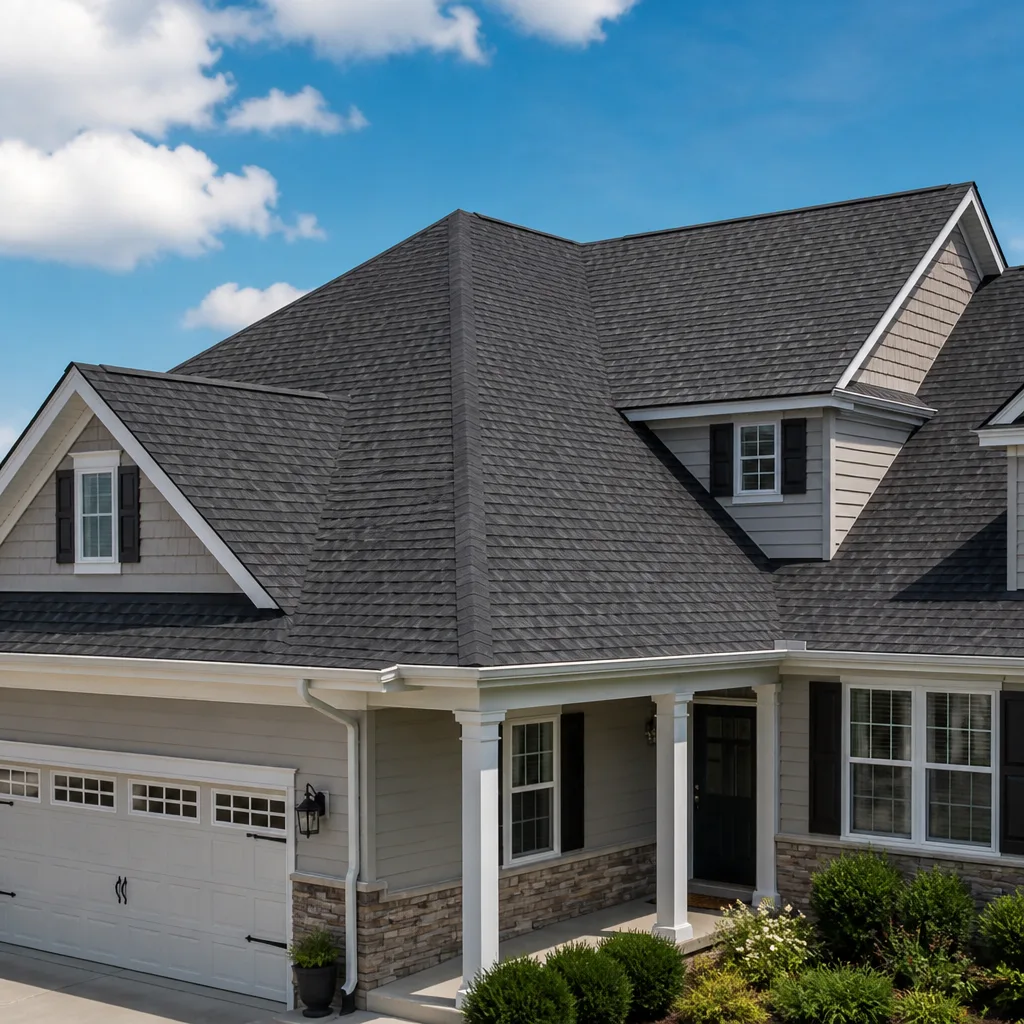
- Check asphalt shingle edges on south-facing slopes for curling, granule loss, or blistering. Heat-driven blistering is common on Paradise roofs exposed to full afternoon sun.
- Look at roof valleys for accumulation of debris and check valley metal for tears or corrosion.
- Examine ridge caps and hip caps for lifted shingles or exposed fasteners. Wind gusts during monsoon season exploit any loose edge.
- Check parapet walls and flat roof transitions, which are especially vulnerable in Paradise’s mid-century and commercial-style residential structures.
Most roofing manufacturers – GAF, CertainTeed, Owens Corning, and others – require documented maintenance records to honor warranty claims. If you perform DIY repairs or skip inspections, and a leak develops later, the manufacturer can deny coverage. That’s not a small detail in Paradise, where a failed roof in August can mean water intrusion during the exact moment you need dry conditions inside.
We recommend a professional roof inspection every 12 to 18 months for Paradise homes, with a specific focus on sealants and penetrations before monsoon season. A general contractor in Paradise who works with multiple roofing manufacturers can evaluate your roof without pushing a single brand.
Monsoon Prep Checklist: July Through September
Paradise sits at the edge of the North American Monsoon, and storms here are different from what homeowners in other regions experience. Months of drought dry out soil, harden surfaces, and fill drainage channels with dust and debris. Then, a storm drops an inch of rain in under an hour. Water can’t absorb into rock-hard soil fast enough, so it sheets across the surface and finds every low point, crack, and gap in your home’s exterior.
Monsoon prep checklist for Paradise, July through September:
- Clear all downspouts and gutters. Even one season of Paradise dust plus a single storm can pack downspout elbows solid. Run water through each downspout to confirm clear flow.
- Inspect flat roof drains and scuppers. Paradise has a significant number of flat and low-slope roof designs. A single blocked scupper on a flat roof means ponding water, structural load, and eventual membrane failure.
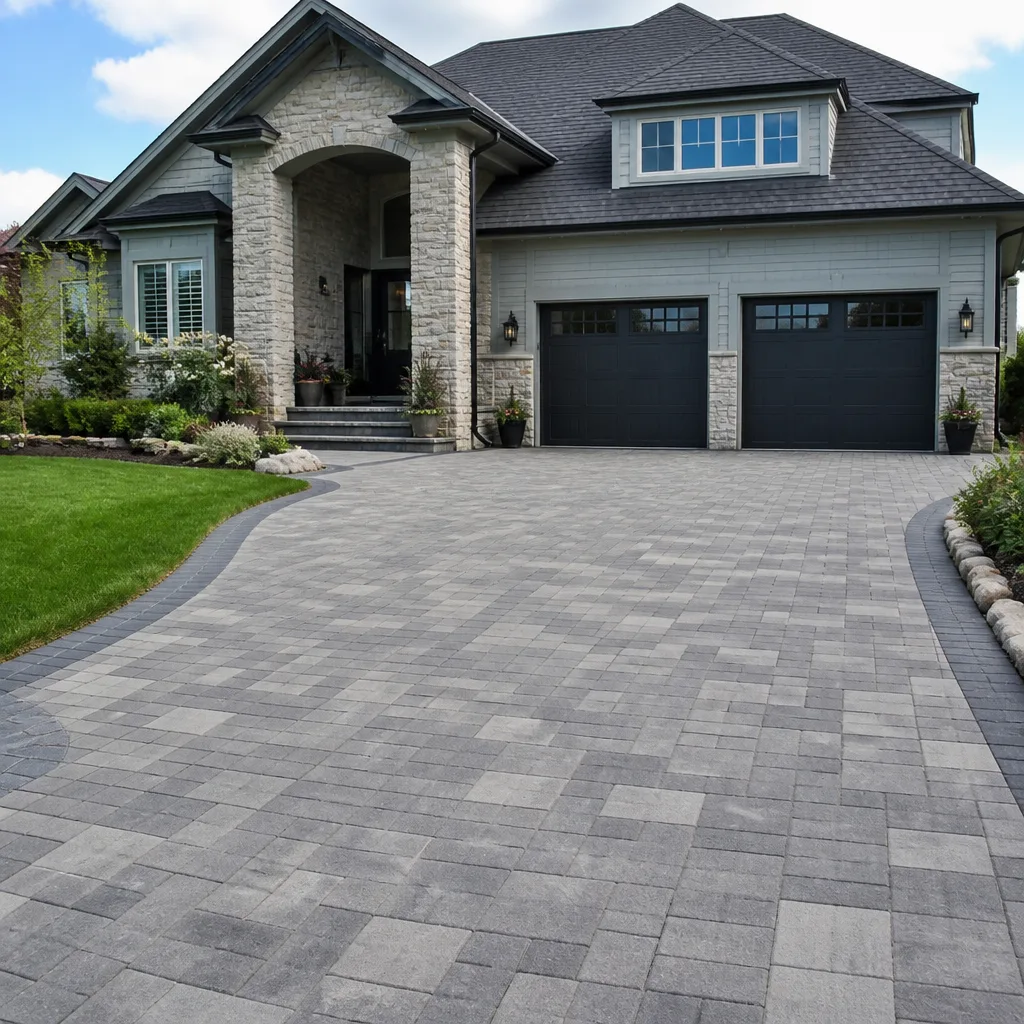
- Verify hardscape drainage slope. Walk your paver patios, walkways, and concrete slabs after the first significant rain. Look for standing water that remains 30 minutes after the rain stops. Interlocking pavers from manufacturers like Techo-Bloc and Cambridge Pavers require a minimum 1% to 2% slope away from the structure. Flat spots mean water penetrates joint material and destabilizes the base.
- Check grade around the foundation. Paradise lots are graded to direct water away from the slab, but settling occurs. Look for areas where mulch, rock, or soil has built up against the stem wall, allowing water to pool against the foundation.
- Inspect window weeps and thresholds. Windows have small drain holes at the bottom of the frame. Clear them with a soft brush. Water that can’t drain through the weep system flows inward.
- Test sump pumps and drainage channels if your home has them. Few Paradise homes have basements, but low-lying properties may use area drains or French drains. Clear any debris from the grates.
Monsoon preparation is not a luxury in Paradise. It’s the difference between a storm passing through and a storm taking a piece of your home with it. The home remodeling work we do in Paradise frequently includes drainage correction because previous homeowners ignored slope and grading until the water found its way inside.
HVAC Filters and Ductwork: Tied to Paradise’s Dust Load
Generic maintenance guides recommend changing your HVAC filter every 30 to 90 days in most climates. Paradise is not most climates. The valley’s fine dust – much of it particulate from surrounding desert terrain and construction activity – loads up filters faster than any manufacturer’s standard interval predicts. And a clogged filter costs you in two ways: reduced efficiency and contaminated ductwork.
What we recommend for Paradise homes:
- Check filters every 30 days during summer, when the AC runs nearly constantly and dust load peaks. Replace when you can no longer see through the filter media.
- Use MERV 8 to MERV 11 filters for most residential systems. Higher MERV ratings restrict airflow on systems not designed for them, which shortens blower motor life and raises energy costs.
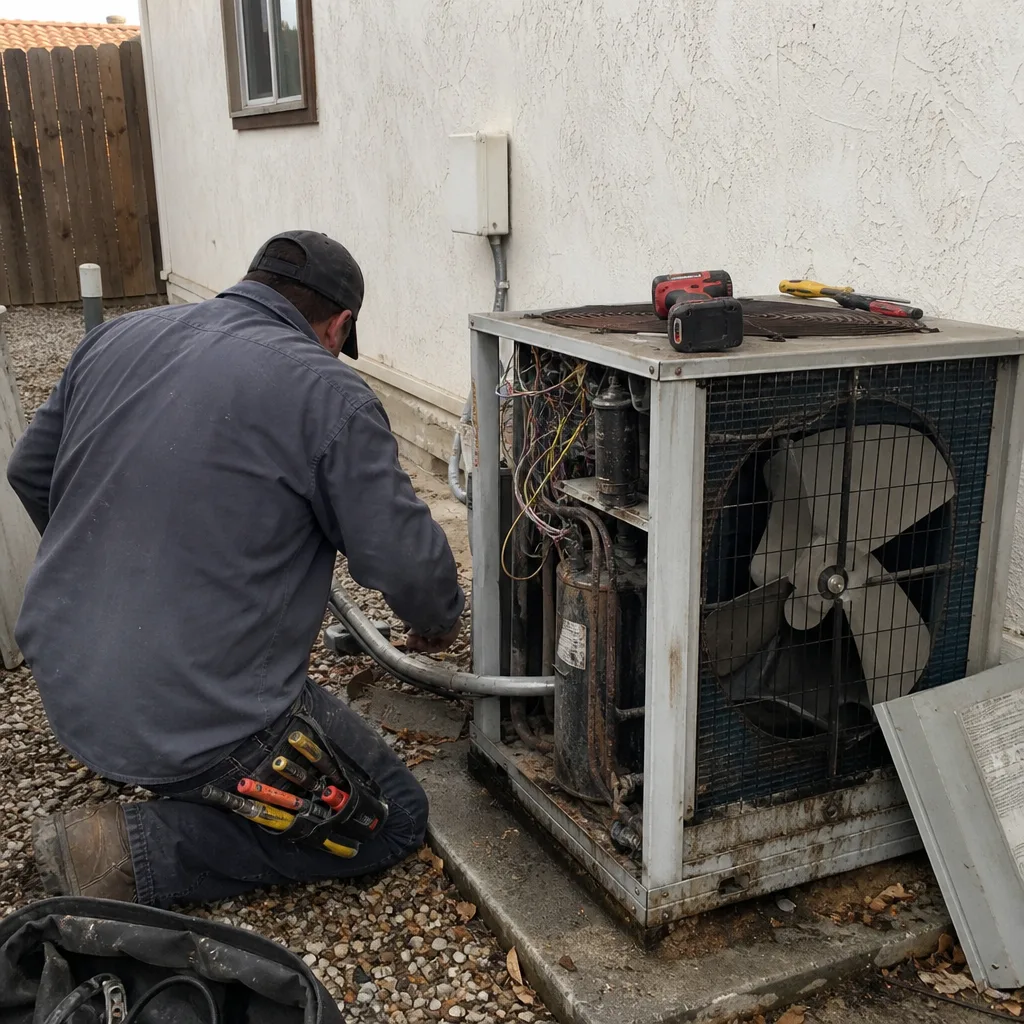
- Inspect return air grilles and coil surfaces every six months. Paradise dust coating a coil reduces heat exchange and forces the compressor to run longer for the same cooling.
- Have ductwork inspected every three to five years by an HVAC professional. Dust intrusion through leaking ducts means you’re paying to filter air that’s bypassing the filter entirely.
One point that gets overlooked in Paradise: construction and renovation projects add dramatically to household dust load. If you’re mid-remodel, filter replacement frequency should double. We advise clients planning home renovation in Paradise that duct sealing and duct cleaning are best done after the last drywall sanding and before the first full summer of the renovated home’s operation.
Stucco, Deck Coatings, and Hardscape: Oxidation and Slope
Paradise homes lean heavily on stucco, concrete, and interlocking pavers. These materials are well-suited to the climate, but they have specific failure modes that homeowners in other regions don’t anticipate. The common thread is water: how it enters, how it drains, and how much damage it does when it gets where it shouldn’t be.
Stucco inspection points for Paradise homes:
- Check for hairline cracks at corners, around windows, and along expansion joints. Cracks that appear in a stair-step pattern over block walls may indicate foundation movement, not just weather.
- Look for white efflorescence on stucco below parapet caps or scuppers. That’s mineral deposit left by water traveling through the substrate, and it signals moisture intrusion.
- Probe around hose bibs, electrical boxes, and dryer vents. These penetrations are common leak sources in Paradise homes, especially after monsoon-driven wind pushes rain sideways against the wall.
Deck and balcony coatings:
Exterior deck coatings in Paradise oxidize on an accelerated schedule. UV exposure breaks down the polymer binders at the surface, leaving chalky dust that rubs off on shoes. Once the coating chalks, it’s no longer shedding water effectively. Reapplication on a proper schedule is essential. If you’re considering a hardscape upgrade, products from manufacturers like Cambridge Pavers and Techo-Bloc offer UV-stable color and are built for high-desert conditions, though proper base preparation and slope remain essential regardless of what you install.
Hardscape slope verification:
- After any significant rain, check for ponding on paver surfaces and concrete slabs.
- Look for pavers that have settled or shifted, which indicates joint material failure and base erosion below the surface.
- Inspect the edge restraint on paver installations. Exposed edge restraint means the entire field of pavers is at risk of lateral movement.
Window and Door Seals: What Shifts After Heat Cycles
Windows and doors in Paradise endure thermal expansion cycles that most of the country never experiences. A south-facing window frame can exceed 140°F in July and drop to 60°F overnight. That’s an 80-degree swing repeated daily for three months. Every material in the assembly – vinyl, aluminum, glass, sealant, weatherstripping – expands and contracts at a different rate.
What heat cycles do to windows and doors in Paradise:
- Sealant joints fail incrementally. The first sign is a hairline gap between the window frame and the stucco or siding.
- Weatherstripping compresses and loses memory. A door that sealed tightly in January may have a visible gap at the threshold by August.
- Insulated glass units become stressed at the edge seal. The first visible sign is interior fogging or condensation between panes, especially on south- and west-facing windows.
- Frames distort slightly, making sashes difficult to open or close. Forcing a distorted sash can break hardware.
Check window and door seals twice a year: once after the first 100°F week, and once after the last major heat wave in September. Look for daylight visible around door edges, drafts felt near window frames, and condensation between panes. If you’re planning window replacement as part of a larger remodeling project, see How to Hire a Construction Contractor in Paradise: A Step-by-Step Guide and note that manufacturers like Therma-Tru, PGT, and CGI build units designed for high-UV and high-wind regions. The important part is that installation is done by someone who understands how these units behave in Paradise’s thermal cycle.
What a Homeowner Can Do vs. What Needs a General Contractor
Most Paradise homeowners can handle routine inspection and minor maintenance. But several tasks either require specialized knowledge or carry warranty implications. Misjudging which category a task falls into costs you money, and sometimes more than money.
Homeowner-appropriate tasks:
- Visual exterior inspections during the first 100°F week and after monsoon season.
- Clearing downspouts, gutters, and window weeps.
- Replacing HVAC filters on a Paradise-specific schedule.
- Caulking hairline gaps around windows and doors where the existing caulk has failed but the surrounding materials are intact.
- Observing drainage patterns after rain and noting problem areas for professional follow-up.
Tasks that require a licensed contractor or specialist:
- Any roof penetration repair. Roofing manufacturers including GAF, CertainTeed, and Owens Corning require professional installation and repair to maintain warranty coverage. A DIY patch voids the warranty on the entire roof system.
- Window frame replacement or installation. Window manufacturer warranties are conditional on professional installation. Self-installed windows from Therma-Tru, PGT, or CGI typically carry no warranty.
- Stucco crack repair larger than 1/16 inch. Cracks of this size often indicate movement below the surface. Filling them cosmetically allows moisture to continue entering.
- Hardscape base repair. If pavers have settled or shifted, the base has failed. Spot-fixing visible symptoms doesn’t resolve the sub-surface problem.
- Deck coating removal and reapplication. Proper preparation requires power washing, crack repair, and often multiple coats of elastomeric coating. DIY kits rarely bond properly to oxidized surfaces.
A Ellsworth Contractors home inspection covers exterior, interior, and roof systems as part of a single scope of work, which saves you from coordinating multiple specialists. And because we work with brands across every major category – from James Hardie siding to Techo-Bloc hardscaping to GAF roofing – the recommendation you get is based on what your home needs, not what a single product rep wants to sell.
Common Mistakes to Avoid
- Using calendar-based maintenance from a four-season climate. Paradise has two seasons that matter: extreme heat and monsoon. Checklists built for other regions miss the timing entirely.
- Caulking over failed caulk. New sealant will not bond to oxidized, chalky, or cracked old sealant. The old bead must be fully removed for the repair to last more than one summer in Paradise’s UV.
- Ignoring hairline stucco cracks. They look cosmetic, but in Paradise they’re the first entry point for monsoon rain driven sideways at 40 mph. A crack smaller than a credit card’s thickness can still let water through.
- Scheduling roof maintenance only in spring. Spring inspections miss the damage caused by summer heat and monsoon wind. A fall inspection is the one that actually catches what summer did to your roof.
- Forgetting that DIY roof or window repairs void warranties. Manufacturer warranty language is specific. If the work wasn’t done by a licensed professional, the coverage is gone, and in Paradise’s climate, that coverage matters.
- Delaying hardscape drainage fixes. Once water erodes the paver base, the repair cost triples. What starts as a $400 slope correction becomes a full removal and base rebuild.
- Running HVAC systems with clogged filters through monsoon season. A clogged filter restricts airflow, coils freeze, and the system fails during the hottest weeks of the year. In Paradise, that’s not a comfort problem. It’s a health risk.
See the difference
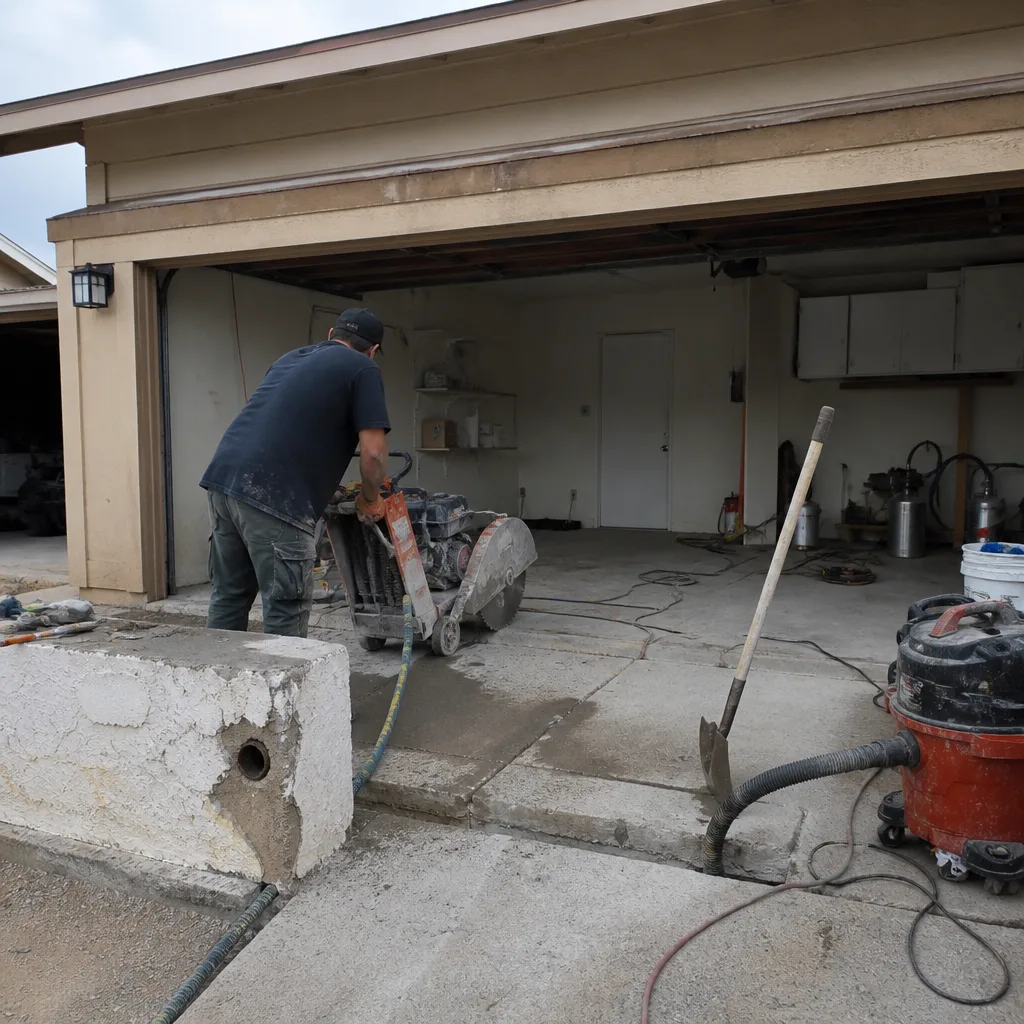 Before
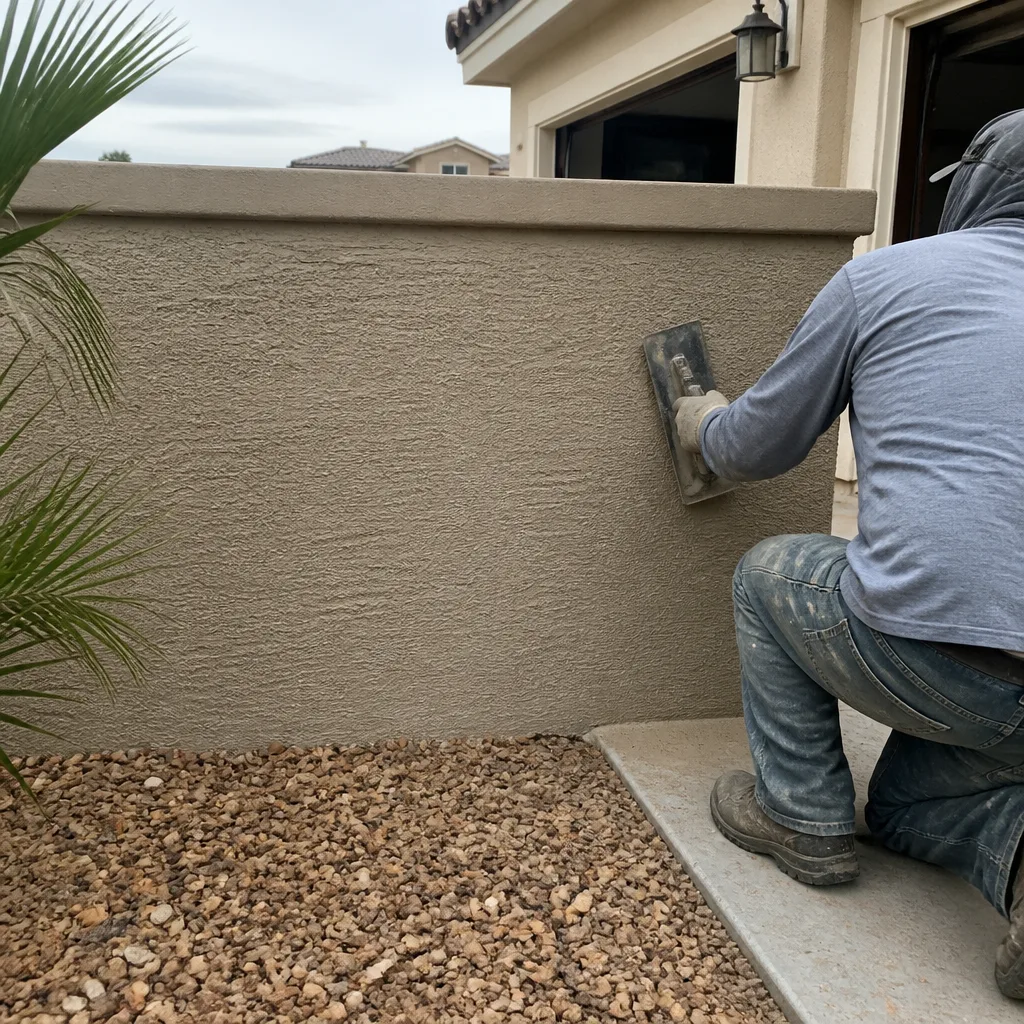 After
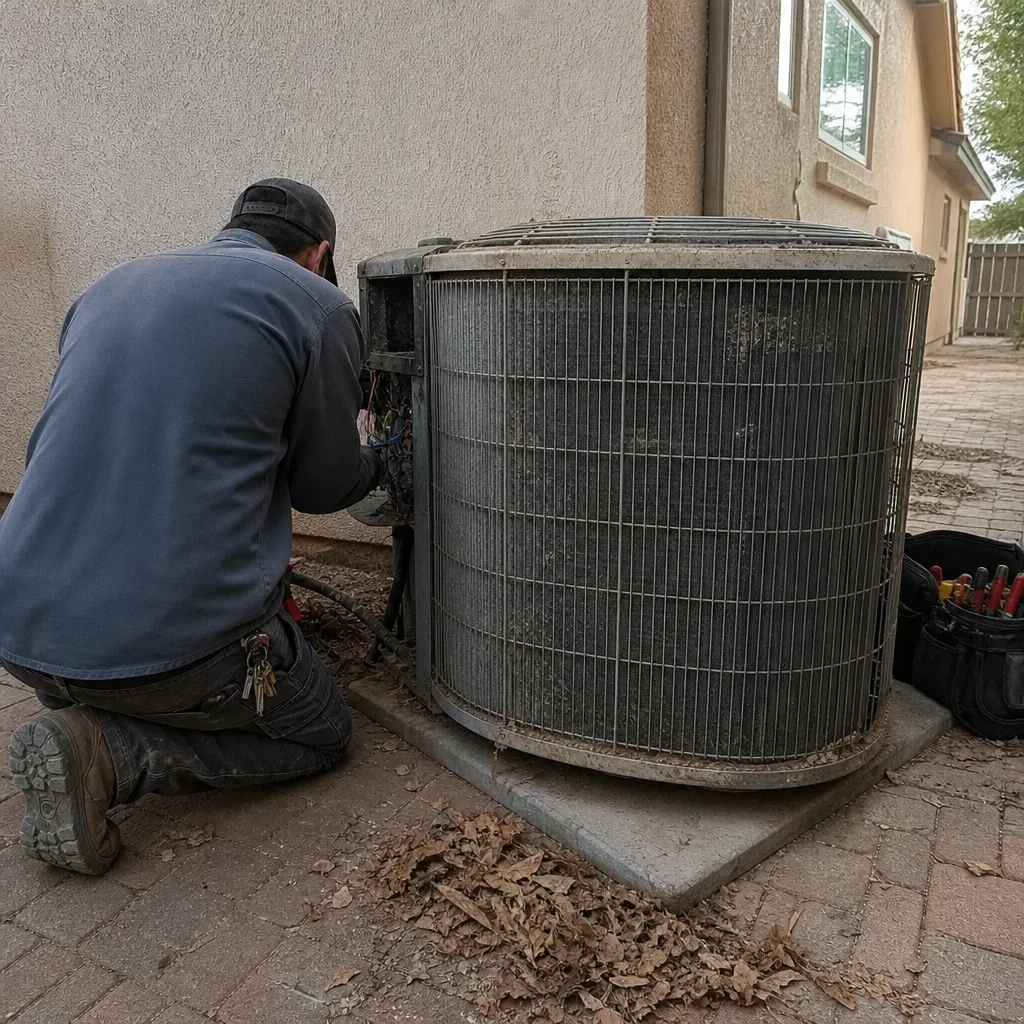 Before
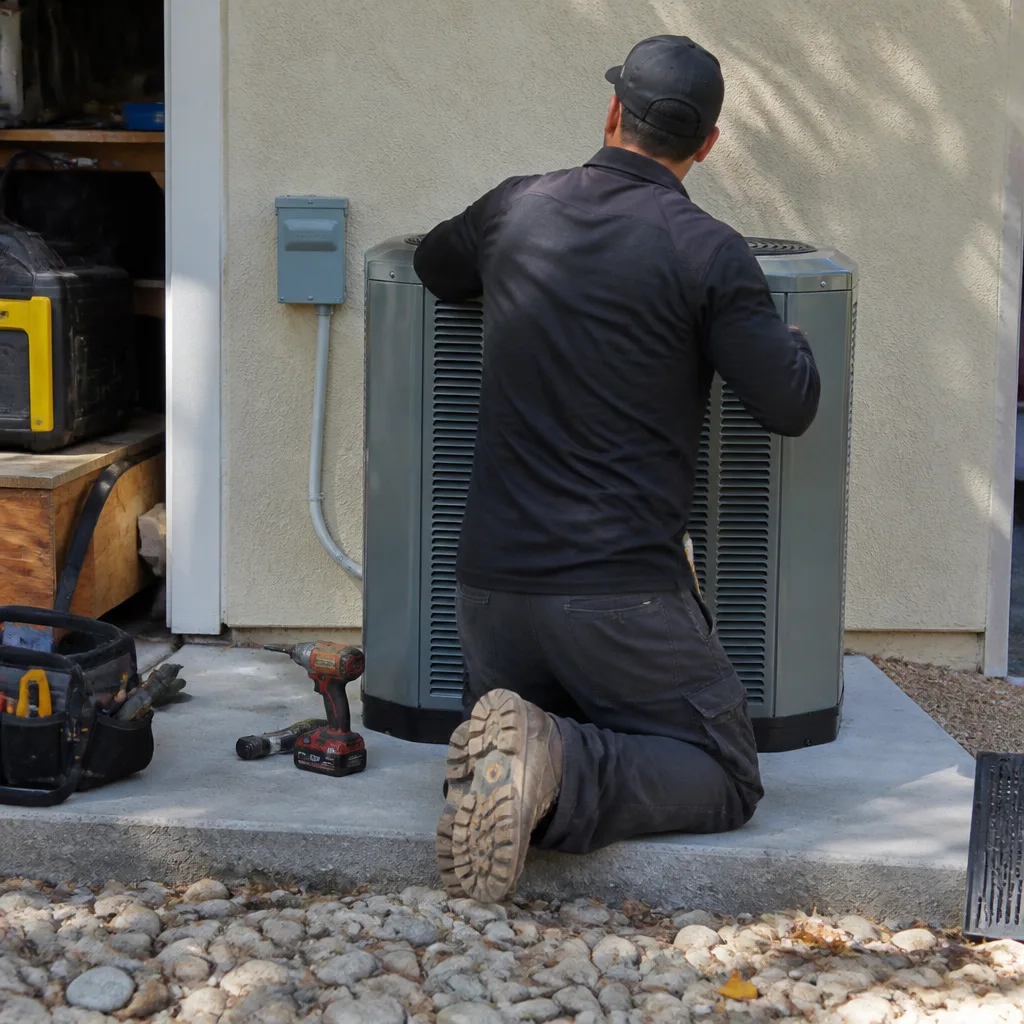 After
 Before
 After
When to Call a Professional
If your exterior inspection turns up cracks wider than a hairline around windows or corners, if your roof shows granule loss or sealant failure at penetrations, if your hardscape ponds water after rain, or if you see condensation inside your windows, stop the DIY fixes and get an evaluation. These symptoms indicate that water is already entering your home’s envelope or that structural movement is underway. Neither problem gets better with time in this climate. And if you’re planning a larger renovation – kitchen, bath, exterior, or ADU – addressing drainage and envelope issues before the remodeling starts saves you from tearing out new work later.
Ellsworth Contractors offers free estimates in Paradise. Call (888) 445-6077 and we’ll walk your property with you, no obligation and no pressure.
Frequently Asked Questions
A basic visual inspection of the exterior, roof, windows, doors, and drainage typically costs between $150 and $400 in Paradise, depending on property size and whether specialized equipment is needed. Some licensed general contractors, including Ellsworth Contractors, credit the inspection fee toward the cost of any repair work you authorize. Call (888) 445-6077 to schedule a walkthrough and ask about fee credit.
Inspect caulking and seals twice a year: once after the first 100°F week of summer, and once after monsoon season ends in September or October. Paradise’s heat and UV load accelerates sealant failure beyond what homeowners in other regions should expect.
Monsoon season in Paradise runs from July through September, with peak storm activity typically arriving in August. The National Weather Service considers the North American Monsoon active in Southern Nevada when moisture moves north from Baja and the Gulf of California, generating intense afternoon and evening thunderstorms.
Yes, flat and low-slope roofs are common in Paradise, particularly on mid-century and custom residential architecture. Flat roofs need drain and scupper inspection before monsoon season every year, plus a visual check of the membrane for blisters, cracks, or ponding water after any significant storm.
Yes, in most cases. Manufacturers like GAF, CertainTeed, Owens Corning, Therma-Tru, PGT, and CGI require professional installation and repair to maintain warranty coverage. Any self-performed repair or modification at a roof penetration, flashing, or window frame typically voids the warranty for the affected components and, in some cases, the entire system. Call (888) 445-6077 before attempting a repair to confirm warranty implications.
Properly installed stucco on a Paradise home can last 50 years or more, but the sealants and expansion joints within the stucco assembly fail on a much shorter timeline. You should expect to repair or replace sealant at every window, door, and expansion joint every 5 to 10 years in this climate, and inspect the stucco itself for cracks after each monsoon season.
The Bottom Line
A Paradise home maintenance checklist has to be built around UV and monsoon, not the calendar. The first 100°F week triggers your window, door, and caulk inspection. July through September demands drainage and roof preparation for the storm surge. HVAC filters follow the dust load, not a generic 90-day schedule. And any repair that touches roofing, windows, or structural stucco belongs in the hands of a licensed professional, because warranty coverage and long-term performance depend on it. Paradise rewards homeowners who pay attention to the right things at the right time. It punishes those who follow the wrong checklist. Explore more guides & resources to stay ahead of seasonal maintenance. For help building a property-specific maintenance plan, call (888) 445-6077.
Written by the team at Ellsworth Contractors, serving Paradise since 2014.